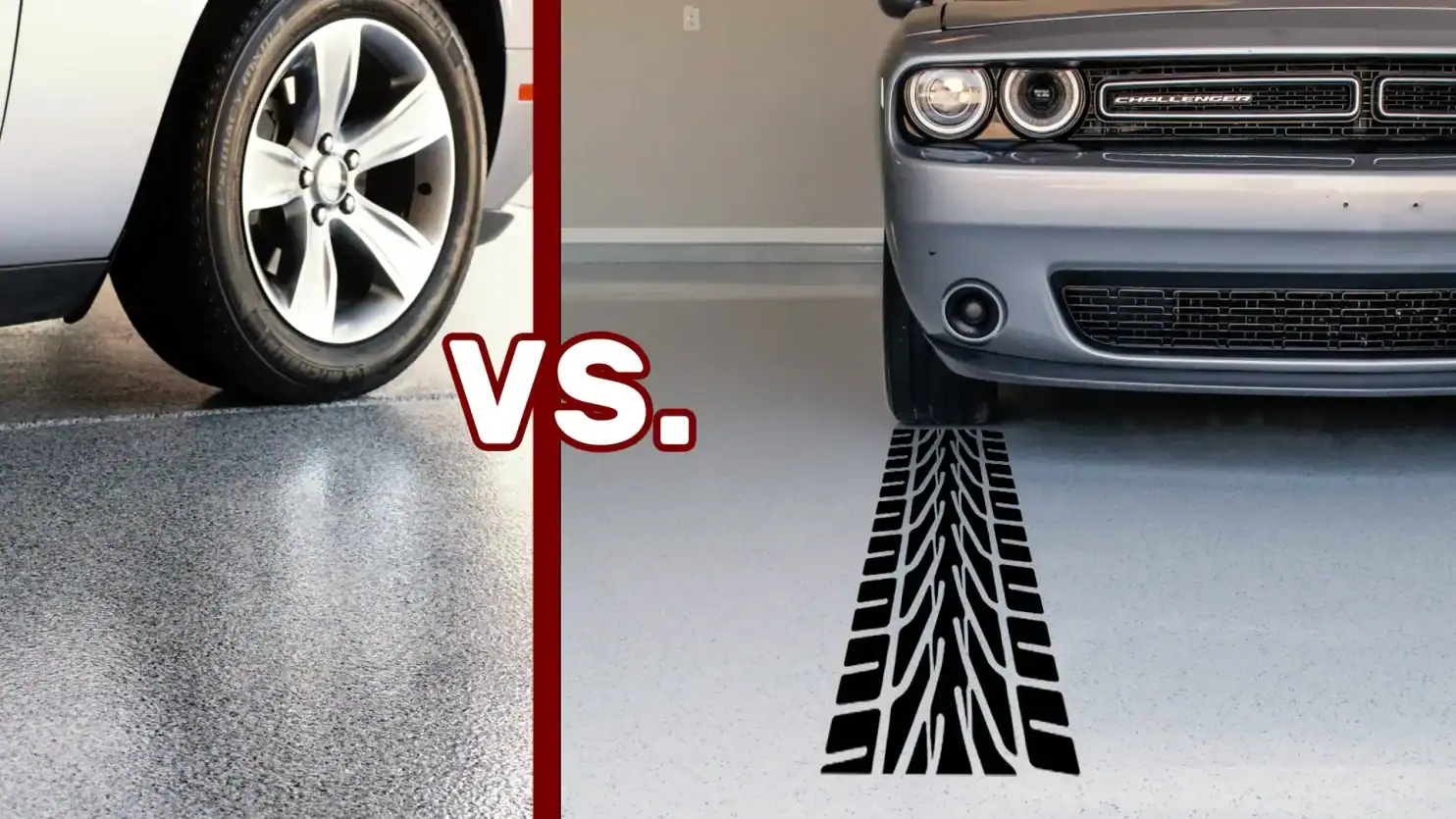
Your garage floor may look flawless today. Smooth, clean, and professionally finished. But every time you park your car, a hidden process begins that can slowly damage the surface. Hot tire transfer is one of the most common causes of early concrete coating failure. A properly installed polyaspartic floor coating is designed to protect against it.
What Happens Every Time You Park
Car tires contain plasticizers that keep rubber flexible. As tires heat up during driving, these compounds migrate to the surface.
When you park, those plasticizers transfer into the concrete coating below (in poorer quality coating systems). Over time, this leads to staining, a sticky surface, and eventual adhesion breakdown in inferior garage floor coatings.
Hot tire transfer is not just cosmetic. It is often an early warning that the system is failing.
Why Some Floors Break Down Faster Than Others
Many 1-day garage floor coatings rely on a less-than-100%-solids polyurea or polyaspartic (often with substandard cross-linking) as both the direct-to-concrete primer coat (a bad idea) and single, clear top coat. While fast-curing (allowing the installer to finish in the promised one day), these systems are often lacking in both moisture and stain-resistant properties necessary for long-term performance.
First, without a high-build, moisture-mitigating epoxy base layer, “1-day” coatings are left vulnerable to moisture-related issues, like moisture vapor transmission (MVT) and hydrostatic pressure originating from the concrete slab below.
Second, the polyaspartic top coat used in “1-day” systems are often less-than-100%-solids, and with 1-to-1 mix ratios, possess low cross-linking density. This makes them highly susceptible to hot-tire transfer.
How a 2-Day Polyaspartic Floor Coating System Prevents It
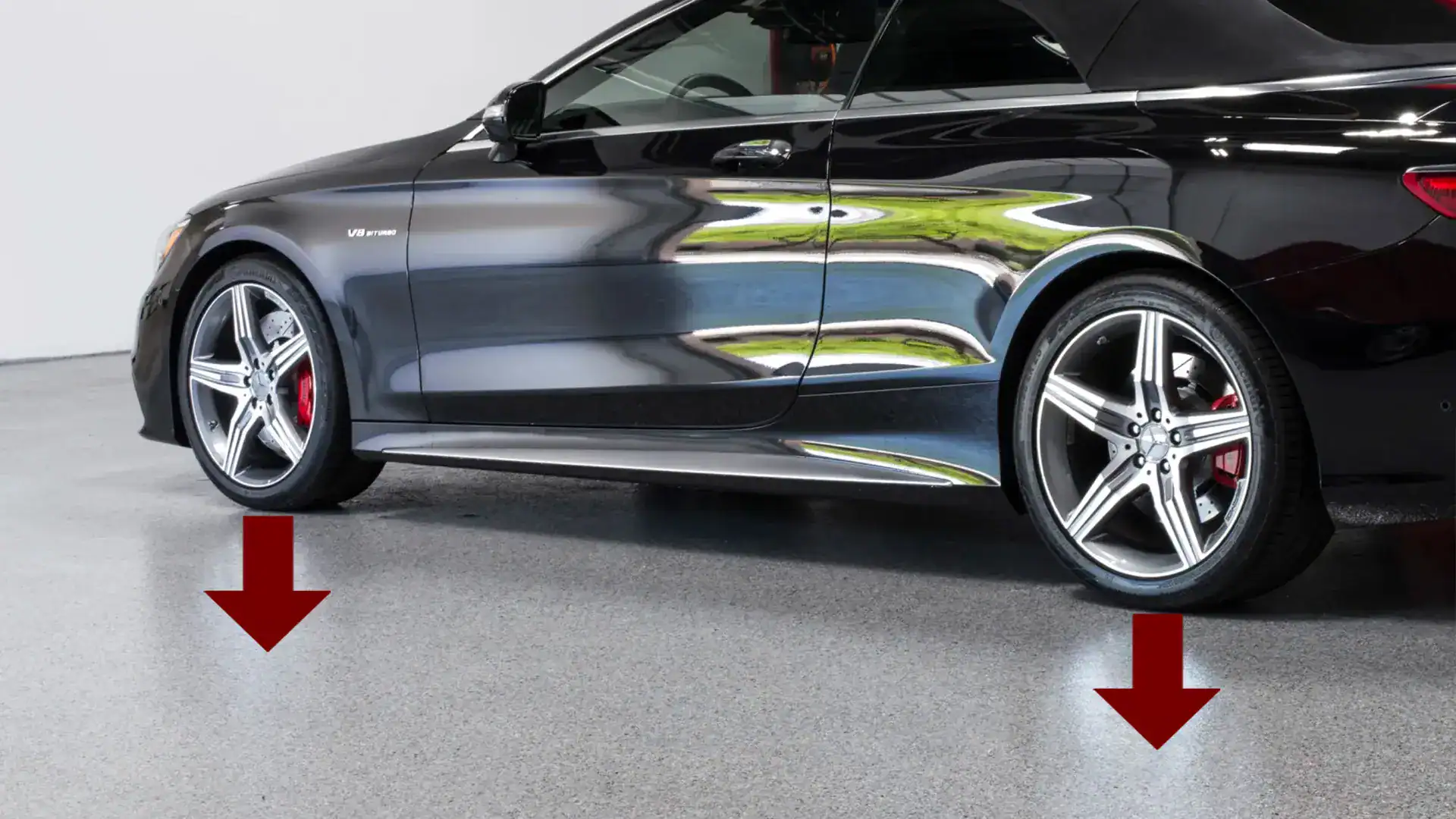
At Garage Floor Coating of New Jersey, we install a 2-day hybrid epoxy and polyaspartic system that uses 100%-solids coatings throughout.
Day one includes mechanical grinding to prepare the concrete. Then, a high-build, moisture-mitigating, 100%-solids epoxy base coat is applied and allowed to fully cure. (It acts as a moisture vapor barrier). A full flake broadcast (the customer’s chosen flake blend) is embedded into this base layer. The thick epoxy base coat is left to cure overnight for deep concrete penetration.
On day two, two separate (not just one!), 100%-solids, highly cross-linked polyaspartic topcoats are applied, They create a strong, UV-stable surface that resists heat, pressure, chemical exposure…and hot-tire transfer!
Built to Handle Daily Wear Without Breaking Down
A high-quality polyaspartic floor coating prevents hot tire pickup, resists staining, and maintains its appearance over time.
In New Jersey, where temperature swings and daily use put floors to the test, that durability matters.
Contact Garage Floor Coating of New Jersey today to learn more about a polyaspartic flooring system designed to stop hot tire transfer before it starts.