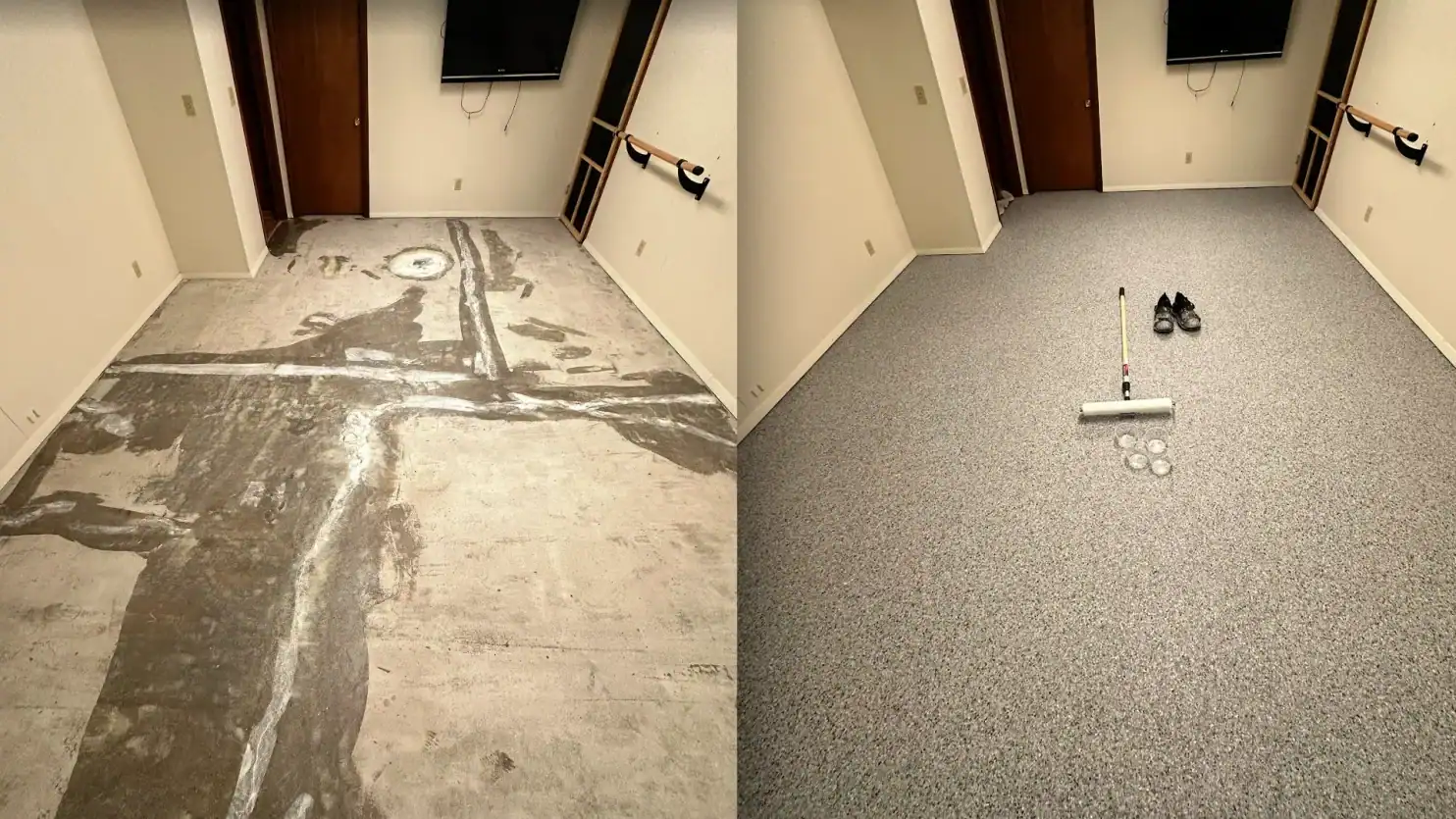
A garage floor doesn’t succeed or fail based on the coating alone. Evaluating the concrete, repairing cracks, mechanically preparing the surface, and addressing moisture all occur first, and each step directly affects how well an epoxy floor coating performs over time.
Here’s the concrete preparation timeline behind a professional garage floor coating when it’s done the right way.
Assessing Cracks and Natural Concrete Movement
Every qualified installer works from the same reality. There are two types of concrete: concrete that’s cracked, and concrete that’s going to crack. In New Jersey, seasonal temperature swings and changing moisture conditions make expansion and contraction unavoidable.
Before an epoxy floor coating is installed, existing cracks must be repaired using a flexible elastomeric filler. This type of repair allows the slab to move naturally, helping mitigate inevitable shifting instead of forcing stress into the finished coating.
Mechanically Preparing the Concrete for Bonding
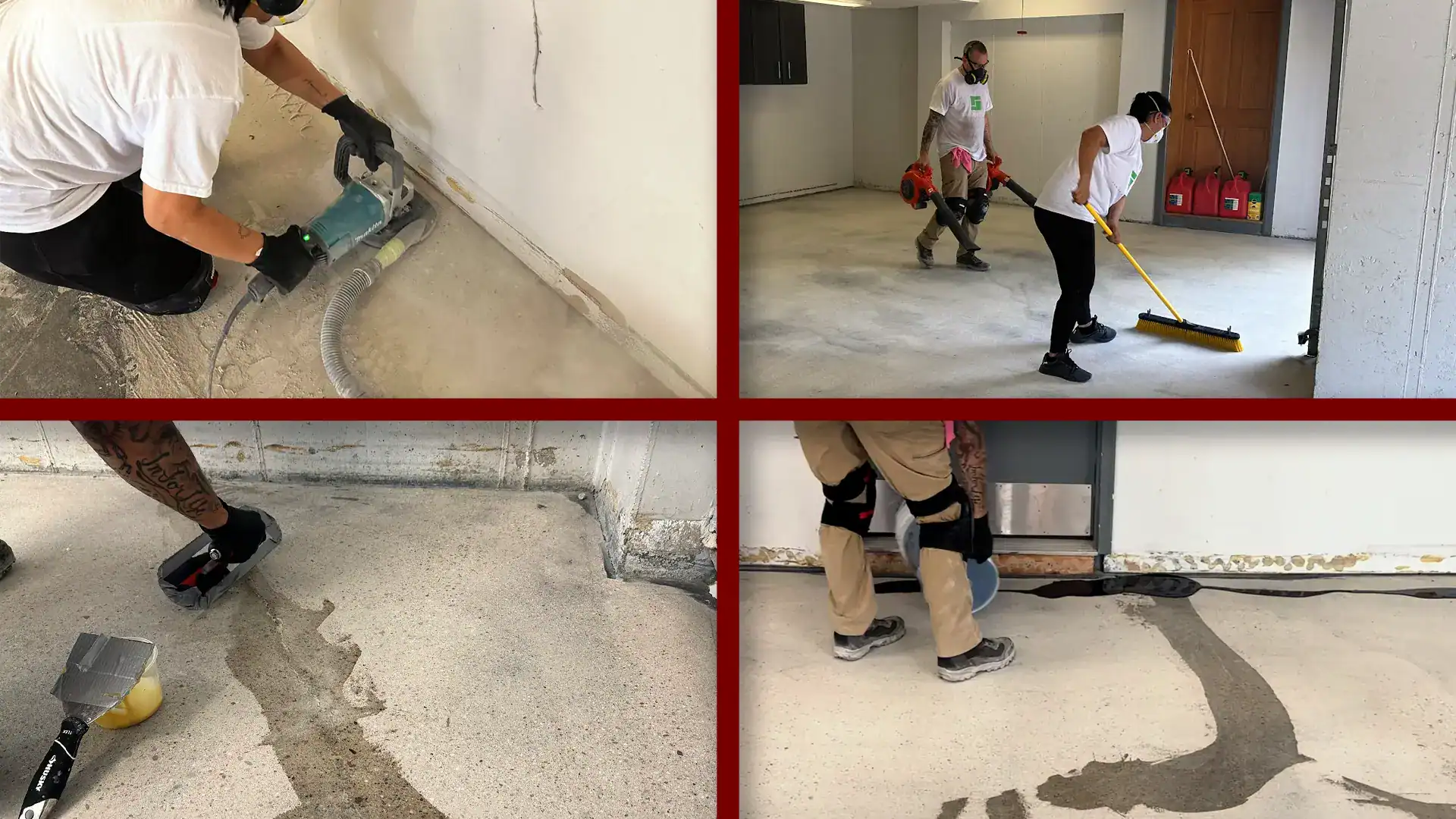
After crack repair, surface preparation begins. Sweeping, degreasing, or acid etching alone do not properly prepare concrete for coatings.
Professional installers use diamond grinding equipment to create the correct concrete surface profile. Grinding opens the pores of the slab, removes weakened or contaminated concrete, and ensures the epoxy can form a strong mechanical bond rather than relying on surface adhesion alone.
Testing and Addressing Moisture in the Slab
All concrete contains moisture. Before applying epoxy floor coatings, installers should test moisture levels using calibrated meters. Moisture vapor rising through the slab is a common cause of coating failure when it’s ignored.
When readings are elevated, a slower-curing, moisture-mitigating epoxy primer (never a quick-cure polyurea or polyaspartic) is applied. The moisture-mitigating epoxy acts as a moisture vapor barrier, protecting the coating against upward hydrostatic pressures created over time.
Installing the Epoxy Floor Coating System
Once preparation is complete, the garage floor coating system can be installed. High-quality systems often require a 2-day installation instead of a rushed 1-day approach. This allows each layer to cure properly and perform as intended.
If you’re considering an epoxy floor for your New Jersey garage, the preparation process should never be an afterthought. Garage Floor Coating of New Jersey specializes in professional surface prep, flexible crack repair, and moisture-mitigating systems designed for long-term performance.
You can also use our Live Coatings Visualizer to preview how an epoxy floor coating could look in your actual garage before moving forward. Reach out today to schedule a consultation and take the next step toward a garage floor built to last.